
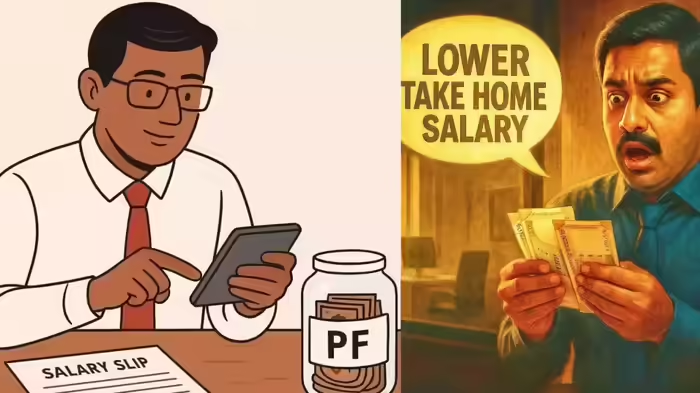
New Labour Codes Reshape Salary Structures Across India
The central government has recently implemented four new labour codes aimed at securing employees’ long-term financial interests. These changes will also bring significant adjustments to salary structures nationwide.
How the New Labour Laws Impact Salaries
Under the new rules, the basic salary must constitute at least 50% of the total Cost to Company (CTC). Previously, basic salary was approximately 35% of CTC, with the remainder going largely into tax-free allowances. This change will reduce take-home pay for employees but increase contributions to Provident Fund (PF), National Pension Scheme (NPS), and gratuity, resulting in higher retirement savings.
Expert Insight
Sujit Bangar, founder of TaxBuddy, explained in a LinkedIn post how the new laws will affect salaries. He notes that with a higher basic salary, PF and NPS deductions—which are calculated as a percentage of the basic—will automatically increase.
Practical Example
Consider a 30-year-old employee with a CTC of ₹12 lakh per year. Under the new rules:
- PF contributions (employee + employer) will increase from ₹7,200 per month to ₹12,000 per month—a rise of ₹4,800 monthly. Over 30 years, this results in an additional ₹1.24 crore in PF savings.
- NPS contributions will grow from ₹4,200 per month to ₹7,000 per month—a monthly increase of ₹2,800, which could yield an extra ₹1.07 crore by retirement.
Short-Term vs. Long-Term Impact
As a result, the employee’s take-home pay will decrease by ₹7,600 per month, which will now go towards PF and NPS contributions. However, over a 30-year career, the total retirement corpus will increase from ₹3.46 crore to ₹5.77 crore, providing an additional benefit of ₹2.31 crore in long-term savings.
Bottom Line
While employees may feel the pinch in their monthly take-home pay, the new labour laws are designed to significantly strengthen financial security post-retirement, ensuring higher retirement savings and a more robust social security framework for the workforce.
Discover more from dnyan pravah news
Subscribe to get the latest posts sent to your email.