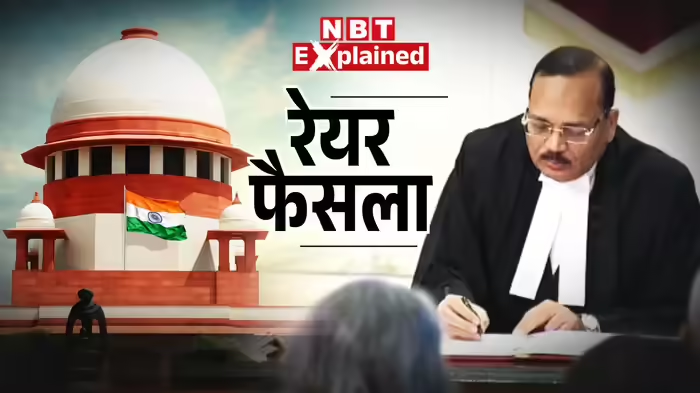
New Delhi: In a rare and landmark judgment, Chief Justice of India (CJI) Surya Kant has, for the first time after assuming office, allowed a minor girl to obtain a Scheduled Caste (SC) certificate based on her mother’s caste, despite her father belonging to a non-SC community. The decision aims to facilitate the child’s education and access to reservation benefits.
Supreme Court Upholds Mother’s Caste-Based Certificate
The bench, comprising CJI Surya Kant and Justice Joymalya Bagchi, upheld a Madras High Court directive granting the SC certificate to the girl from Puducherry, emphasizing that without it, her academic prospects could be adversely affected. The court clarified that the legal question regarding caste inheritance remains open, leaving room for further deliberation in similar cases.
CJI Questions Patriarchal Norms
CJI Surya Kant remarked, “Why should caste certificates not be issued based on the mother’s caste in changing times?” This ruling implies that children born to SC mothers and non-SC fathers, even if raised in a higher caste environment, could be eligible for SC certificates.
Mother’s Appeal
According to reports, the mother had requested the tehsildar to grant SC certificates to her three children—two daughters and a son—based on her Adi Dravidian community status. She argued that after marriage, she continued to reside in her parents’ household, maintaining her caste identity.
Current Caste Determination Rules
Under Presidential notifications dated 5 March 1964 and 17 February 2002, and guidelines from the Ministry of Home Affairs, eligibility for caste certificates is primarily determined by the father’s caste and the individual’s residence within the state or union territory. Historically, the Supreme Court has upheld the father’s caste as decisive, as seen in Puneet Rai vs Dinesh Choudhary (2003).
2012 Precedent
In Rameshbhai Dabhai Nayka vs Gujarat (2012), the Court had ruled that in inter-caste or tribal-non-tribal marriages, a child’s caste is generally presumed to be that of the father, but this is not conclusive. Children could present evidence proving their upbringing by an SC/ST mother and their consequent eligibility for caste-based benefits.
Implications Post-Divorce
In December 2024, the Supreme Court had ruled that even after a divorce between an SC father and non-SC mother, children would retain their SC status. While the mother herself may not receive SC recognition through marriage, her children are entitled to SC certificates, ensuring their educational and social rights are protected.
Religious Conversion Ends Caste Identity
The Court has also clarified that conversion to another religion terminates one’s caste identity, and restoration of caste status would require credible evidence of reconversion to the original religion.
Discover more from dnyan pravah news
Subscribe to get the latest posts sent to your email.