
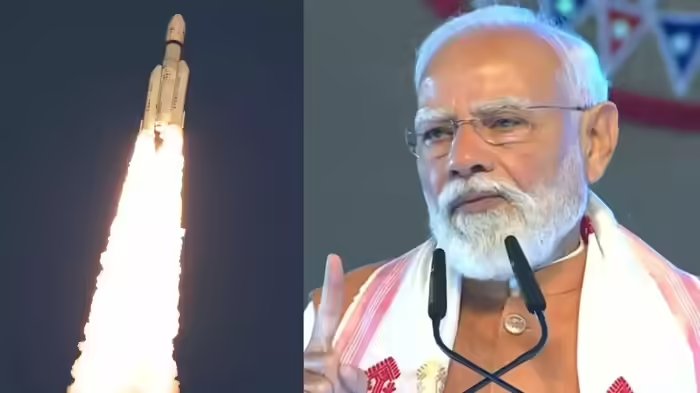
Sriharikota: Once again, the Indian Space Research Organisation (ISRO) has showcased its technological prowess. At approximately 8:54 AM on Wednesday, the LVM3-M6 rocket soared into the skies from the Satish Dhawan Space Centre, carrying the next-generation communication satellite, BlueBird Block-2, developed by the U.S. company AST SpaceMobile.
Prime Minister Narendra Modi congratulated ISRO scientists for this historic achievement. In a post on social media platform X, he said, “India has taken a giant leap in space. With the success of the LVM3-M6 mission, India has launched its heaviest satellite to date—the American BlueBird Block-2—into its precise orbit. This is a proud moment for the nation.”
He added, “This success strengthens India’s capability to launch heavy satellites and highlights our growing role in the global commercial launch market. It is also a testament to our efforts for an ‘Atmanirbhar Bharat.’ Heartfelt congratulations to our hardworking space scientists and engineers. India continues to reach new heights in the world of space.”
Why This Mission is Special
The 43.5-meter tall LVM3-M6 is a three-stage rocket equipped with a cryogenic engine, developed by ISRO’s Liquid Propulsion Systems Centre. For the required high thrust, the launch vehicle is assisted by two S200 solid rocket boosters developed by the Vikram Sarabhai Space Centre. About 15 minutes after liftoff, the BlueBird Block-2 satellite is expected to separate from the rocket and be positioned at an altitude of 600 kilometers.
The mission aims to provide direct mobile connectivity anywhere in the world. The satellite will enable 4G and 5G voice-video calls, messaging, streaming, and data services, offering seamless communication to users globally.
Discover more from SD NEWS agency
Subscribe to get the latest posts sent to your email.