
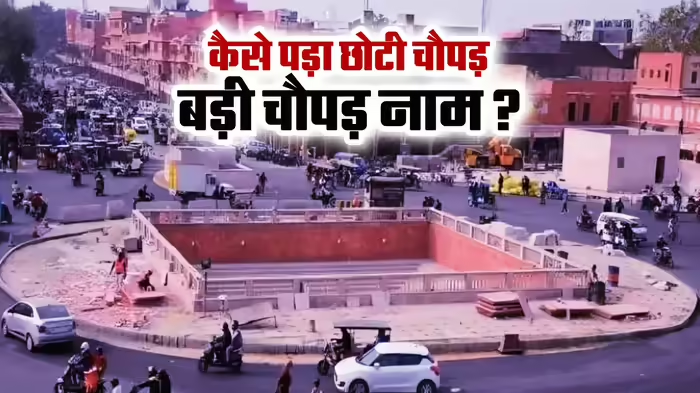
Jaipur: The Pink City of India, renowned for its majestic forts, stepwells, and historic architecture, continues to charm tourists from across the world. While visitors often marvel at the city’s monuments and intricate carvings, Jaipur’s streets themselves hold stories waiting to be explored. Among them, three locations are uniquely known as “Chaupars” — Chhoti Chaupar, Badi Chaupar, and Ramganj Chaupar.
In Rajasthan, locals are familiar with terms like “Chaupar” and “Chaukri.” While a four-cornered open space is called a “Chaukri,” a major crossroads is referred to as a “Chaupar.” Jaipur, despite having numerous intersections, has three that are historically and culturally identified as Chaupars. Their names are derived from the traditional Indian board game “Chaupar” (similar to Pachisi), reflecting both cultural heritage and local identity.
The city of Jaipur was founded in 1727 by Sawai Jai Singh II, the ruler of Amer. The city’s layout was designed by the architect Vidyadhar Bhattacharya after months of meticulous planning. Large residential blocks were created, connected by wide roads and spacious intersections, each given distinct names. Even the smaller lanes were systematically named, contributing to Jaipur’s organized urban structure.
Chhoti Chaupar, Badi Chaupar, and Ramganj Chaupar are all located along a single road. Entering the city from Chandpole, one first reaches Chhoti Chaupar. About 1.5 kilometers further lies Badi Chaupar, and the next major intersection along the same route is Ramganj Chaupar. Despite being on the same road, each Chaupar maintains its own identity and significance.
Nearly three centuries later, Jaipur has evolved into a bustling metro city, yet the original structure of these Chaupars remains intact. The Jaipur Metro now runs beneath Chhoti Chaupar and Badi Chaupar through underground stations, preserving the historic layouts above ground. Ramganj Chaupar is also being integrated into the metro network while maintaining its traditional appearance.
Each Chaupar is surrounded by prominent, thriving markets. Chhoti Chaupar lies amidst Kishanpole, Chandpole, Shirdi Dyodi, and Tripolia markets. Badi Chaupar is flanked by Ramganj, Johri, and Tripolia markets. Similarly, Ramganj Chaupar sits between Ramganj and Ghatgate markets. These markets, some of the oldest in Jaipur, continue to attract shoppers from the city and neighboring districts, maintaining their bustling, evergreen charm.
Jaipur’s Chaupars are more than just intersections; they are living reminders of the city’s rich heritage, architectural foresight, and vibrant commercial culture, making them must-visit destinations for every traveler exploring the Pink City.
Discover more from dnyan pravah news
Subscribe to get the latest posts sent to your email.