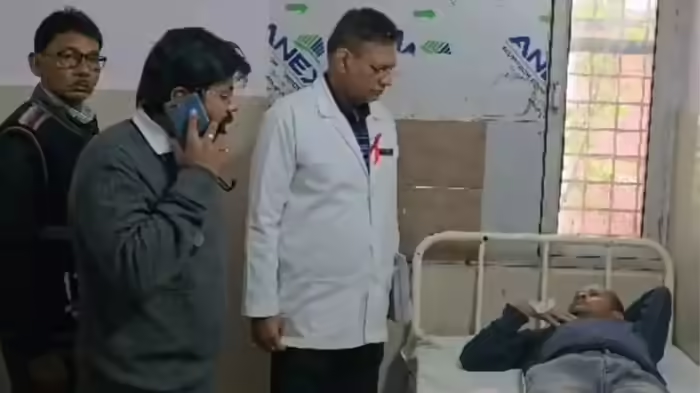
In a landmark medical achievement for Fatehpur district, a heart attack patient received the costly ‘Tenecteplase’ injection—worth ₹40,000 to ₹50,000—completely free of charge at the District Hospital on Tuesday. This is the first time the life-saving drug has been administered without cost to any patient in the district.
52-Year-Old Man Saved After Sudden Heart Attack
The patient, 52-year-old Jai Krishna from the New Tehsil locality under Sadar Kotwali area, experienced severe chest pain and suddenly collapsed on Tuesday morning. His worried family members rushed him to the District Hospital’s emergency department.
Dr. Lavish, who was on duty, immediately examined his heartbeat and identified a critical heart attack condition. Realising the severity, he promptly informed Chief Medical Superintendent (CMS) Dr. Rajesh Kumar.
Tenecteplase Injection Proves Life-Saving
CMS Dr. Rajesh Kumar reached the emergency ward without delay. Considering the emergency situation, doctors administered the extremely costly Tenecteplase injection—provided by the government for heart attack patients—completely free of cost.
Within minutes of receiving the injection, Jai Krishna’s condition began to stabilise. After initial improvement, he was referred to the Heart Disease Institute in Kanpur for advanced care.
Injection Now Available at District Hospital
CMS Dr. Rajesh Kumar stated that the Tenecteplase injection, priced at nearly ₹50,000 in the market, is available at the district hospital specifically for heart attack patients.
“Whenever needed, this injection will be administered free of cost to save lives,” he confirmed.
A Critical Tool in Saving Heart Attack Patients
Cardiology experts highlight that during a heart attack, blood clots block the heart’s arteries, stopping blood flow and putting the patient at extreme risk. Tenecteplase works by dissolving these clots, significantly improving survival chances.
The first 90 minutes after a heart attack—often called the “golden hour”—are crucial. Timely administration of this drug can reduce mortality by 30 to 40 percent.
With this advanced treatment now available in the district hospital, doctors believe that deaths due to heart attacks—especially in rural and semi-urban regions—will see a substantial decline.
Discover more from dnyan pravah news
Subscribe to get the latest posts sent to your email.