
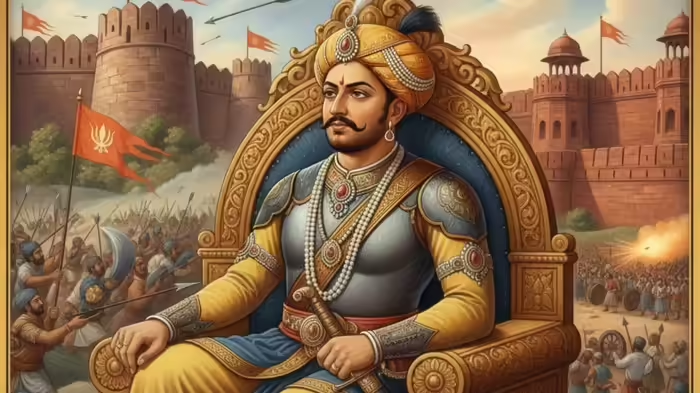
In the annals of Indian history, King Surajmal of Bharatpur holds a prominent place as one of the most formidable Hindu rulers of the 18th century. Known as the “Plato of Rajasthan” and often called Rajasthan’s Chanakya, Surajmal combined brilliant diplomacy, strategic foresight, and military prowess to expand his kingdom and defeat the mighty Mughals.
Early Life and Reign
Surajmal, a Jat king, ruled Bharatpur from 1745 to 1763. His exceptional skills in statecraft, diplomacy, and military strategy earned him the nickname “Jat Afalatoon”, a reference to his unmatched wisdom and courage. Surajmal could anticipate threats, decide when to form alliances, when to wage wars, and when to negotiate treaties, ensuring his kingdom’s dominance. He was also known for distributing loot and resources among his soldiers, keeping them loyal and motivated. Over his reign, he fought approximately 80 battles, emerging victorious in all, an unparalleled achievement for any Hindu ruler in medieval India.
Rise to Power
By 1753, Surajmal had become one of the most powerful kings in India, commanding an army of 75,000 infantry and 38,000 cavalry. He also employed French mercenaries, who trained his forces in modern European military techniques, including mobile artillery, enhancing the effectiveness of his cavalry.
Strategic Diplomacy and Military Triumphs
Following the death of Mughal ruler Muhammad Shah in 1748, the empire weakened. Surajmal capitalized on Mughal internal conflicts, aiding Nawab Safdarjung against Mughal Emperor Ahmed Shah Bahadur. In March 1753, he collaborated with Safdarjung to besiege Delhi and, in May, captured Feroz Shah Kotla. Surajmal ensured efficient supply lines from Bharatpur, enabling his army to maintain a long siege. He also advised Safdarjung to declare a parallel emperor in Delhi to legitimize his rebellion—a masterstroke of political strategy.
Surajmal’s military tactics included luring Mughal troops to open grounds, where his strategically placed artillery on elevated positions decimated enemy forces, causing heavy casualties and panic.
Conquest of Agra Fort
In 1761, Surajmal extended his dominance by capturing Agra Fort, which he purified with Ganga water and rituals, removing all Mughal insignia. The fort remained under Bharatpur rulers until 1774, long after Surajmal’s death in 1763. Through these victories at Feroz Shah Kotla and Agra Fort, Surajmal dealt a decisive blow to Mughal authority, cementing his legacy as one of India’s greatest Hindu kings.
Legacy
Surajmal’s vision of India as a united entity, his strategic brilliance, and his unwavering leadership make him not only the pride of Bharatpur but also a symbol of national pride. Historians continue to regard him as a statesman whose intellect and valor rivaled the greatest rulers and strategists of his era.
Discover more from dnyan pravah news
Subscribe to get the latest posts sent to your email.