
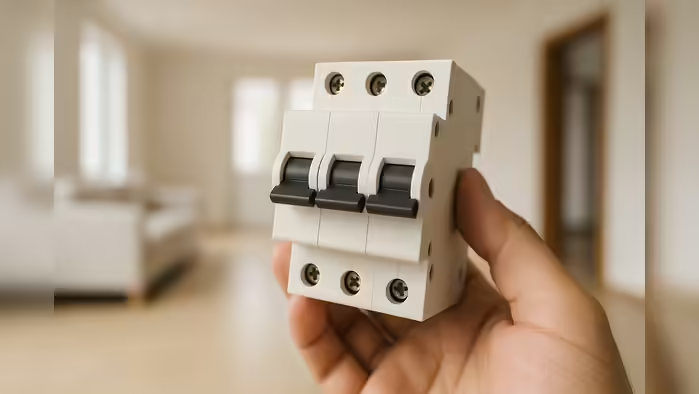
When it comes to protecting your home from electrical hazards like short circuits, a Miniature Circuit Breaker (MCB) plays a vital role. However, not all MCBs are the same, and choosing the wrong type can put your home and expensive appliances at risk. Here’s a detailed guide to understanding the different MCB types and selecting the right one for your home or office.
What is an MCB?
An MCB is an electromechanical device designed to safeguard your home or office from electrical overloads and short circuits. Think of it as an automatic safety switch that instantly cuts off electricity when a fault occurs, preventing potential damage, fires, or appliance failures. Unlike a fuse, an MCB can be reset and reused, making it a convenient and reliable protective solution.
Types of MCBs and Their Uses
MCBs come in various types, each suited to different electrical loads:
- Type A & G MCBs: Ideal for sensitive electronic equipment such as medical devices and laboratory instruments. These MCBs respond quickly to small current fluctuations.
- Type B MCBs: Commonly used in homes to protect lighting, fans, and other low-load appliances.
- Type C MCBs: Suitable for offices, shops, and places with medium-load equipment like air conditioners, fluorescent lights, and small machinery.
- Type D MCBs: Designed for heavy industrial machinery where high inrush currents are frequent, making them ideal for factories and large-scale operations.
Each type is tailored for different environments, depending on the load and frequency of appliance use. Choosing the wrong MCB can compromise safety and may lead to appliance damage or even fire hazards.
How to Choose the Right MCB
To select the correct MCB, consider the following:
- Current Rating: Check the current rating of your home or office circuits and match it with the appropriate MCB.
- Phase Coverage: Ensure the MCB covers all required phases—single-phase or two-phase systems.
- Brand and Certification: Always opt for branded and certified MCBs. Cutting corners on quality can prove costly in terms of safety and appliance longevity.
Electrician Randhir Singh advises homeowners to install separate MCBs for heavy appliances like geysers and air conditioners. “Using a dedicated MCB for each appliance provides double protection. The MCB essentially functions as the appliance’s switch, ensuring both safety and extended lifespan for the equipment,” he says.
Conclusion
While most homeowners pay attention to décor and interiors, the safety of the electrical system is equally crucial. Understanding MCB types and selecting the right one is a simple yet effective way to protect your home, your appliances, and your loved ones from electrical hazards.
Discover more from dnyan pravah news
Subscribe to get the latest posts sent to your email.