
Islamabad/New Delhi.
A gripping scene from the blockbuster Hindi film “Dhurandhar” has ignited intense debate across India and Pakistan. The scene, now viral on social media, shows Ranveer Singh’s character burying children in Balochistan, where a Baloch leader alleges that Pakistan’s intelligence agency, ISI, poisoned the water supply of a local school. This sequence has reopened discussions on longstanding allegations of Pakistani military atrocities in the region.
While the film itself is fictional, its portrayal of human rights abuses in Balochistan has resonated strongly with viewers, particularly among the global Baloch community. The controversy has grown so significant that several Pakistani groups are calling the film “a challenge” for the state, accusing it of revealing uncomfortable truths.
A Film That Unsettles Pakistan
“Dhurandhar” has been making headlines not only for its strong storytelling but also for its bold depiction of Pakistan’s policies in Balochistan. The film’s narrative highlights decades of alleged repression by the Pakistan Army and ISI, including disappearances, torture, and extrajudicial killings.
The most talked-about scene shows children buried in the desert, with a local leader recounting how the school’s water supply was deliberately contaminated. This has sparked anger among viewers who believe the film mirrors real-life brutality.
One social media user from the Baloch diaspora wrote:
“This is why we Baloch people appreciate this film. Yet, we expect Bollywood to show even more about the atrocities committed in our homeland.”
Is the Scene Based on a True Incident?
Although Dhurandhar is a fictional film, several of its elements draw inspiration from real allegations made over the years by Baloch activists.
- A 2016 report by India Today quoted a Baloch activist claiming that the Pakistan Army had allegedly mixed poison in local water sources.
- The same year, Prime Minister Narendra Modi mentioned Balochistan from the Red Fort for the first time, following which activists reported heightened military crackdowns.
According to activists, nearly 50 civilians were killed in Dera Bugti, and over 150 people were abducted, many of whom remain missing to this day. - A 2017 investigation by The Sunday Guardian cited local sources alleging that the Pakistan Army used “chemical agents” in operations across Balochistan and Khyber Pakhtunkhwa. These claims raised serious concerns over potential war crimes and violations of international human rights laws.
A Region Haunted by Disappearances
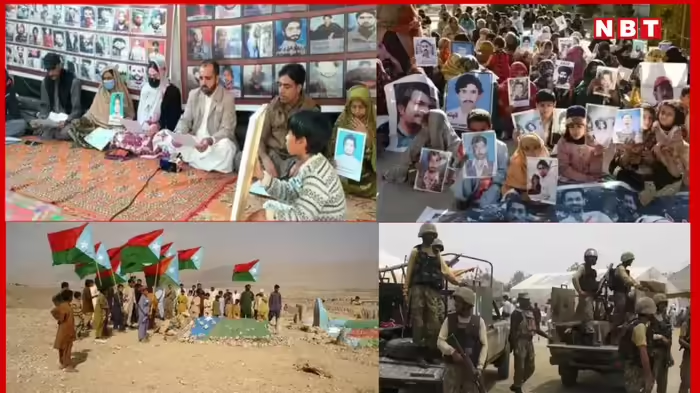
For decades, Balochistan has been engulfed in turmoil, with thousands of enforced disappearances reported. Families still continue to protest in Quetta, Karachi and Islamabad, carrying photographs of their missing loved ones, seeking justice and answers. The discovery of mutilated bodies has only deepened the region’s anguish.
Dhurandhar captures this pain and resistance, delivering a visual narrative that has pushed the conversation back into global awareness. By portraying the struggles of the Baloch people and the allegations of systematic abuse, the film has succeeded in bringing a long-ignored issue into the public spotlight.
Discover more from dnyan pravah news
Subscribe to get the latest posts sent to your email.