
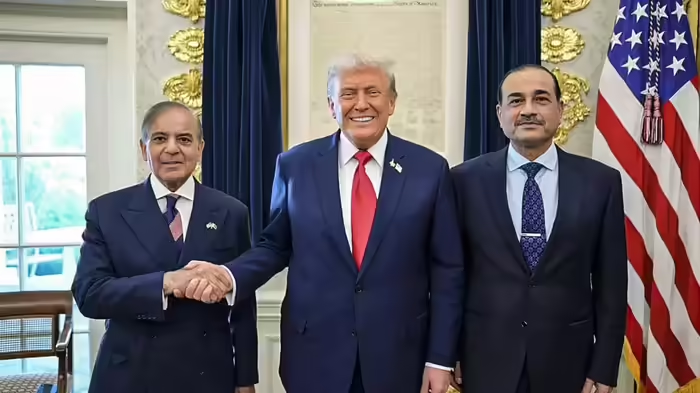
Islamabad: Pakistan’s Army Chief, Field Marshal Asim Munir, is reportedly set for another visit to the United States, marking his third meeting with former President Donald Trump. The visit comes amid U.S. proposals urging Pakistan to deploy its military in Gaza as part of an international stabilization force, aimed at disarming Hamas.
Munir, widely regarded as the most powerful figure in Pakistan’s political and military landscape, now faces a delicate balancing act. While his influence spans national security, domestic politics, and foreign policy, any misstep regarding the Gaza deployment could destabilize Pakistan’s internal order.
U.S. Pressure and International Diplomacy
According to two Reuters sources, Munir is expected to focus on the Gaza force during his Washington visit. Diplomats indicate that the U.S. is seeking contributions from Muslim-majority countries to legitimize the multinational force, with Pakistan being a key candidate. The proposal stems from the U.N. Security Council’s approval in November 2025 of a U.S.-led plan to end the Gaza conflict. However, Pakistan’s response has been cautious: while supporting the plan, it emphasized that critical suggestions—such as avoiding demographic or territorial changes, respecting Palestinian rights, ending Israeli occupation, and reaffirming the two-state solution—were not incorporated into the final text. Analysts have described Pakistan’s stance as a mix of necessity and showmanship.
Domestic Challenges and Risks
For Pakistan, Gaza is more than an international crisis—it is deeply tied to ideological identity. Decades of pro-Palestinian sentiment have shaped political, religious, and public opinion. Any military deployment linked to U.S.-Israeli agendas risks triggering domestic backlash. The decision will be political and emotional, not merely military-technical, creating a potentially explosive situation.
Opposition parties, religious groups, and civil society could target Munir personally, holding him accountable for decisions perceived as yielding to foreign pressure. Historically, Pakistan’s involvement in foreign conflicts, especially alongside U.S. strategies, has fueled internal extremism, violence, and institutional strain—as seen in Afghanistan. Deploying forces to Gaza could similarly test public trust, potentially sparking unprecedented street-level confrontations against the military.
With tensions already high, Asim Munir’s next moves could significantly reshape Pakistan’s political landscape, domestically and internationally.
Discover more from dnyan pravah news
Subscribe to get the latest posts sent to your email.