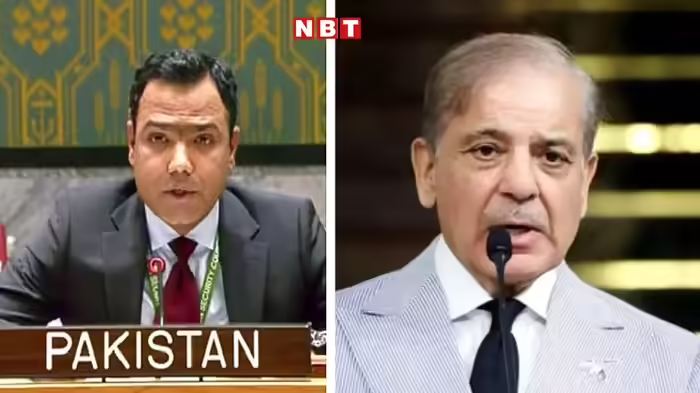
Pakistan raised a series of sharp allegations against India at the United Nations Security Council (UNSC), focusing on Jammu and Kashmir, following India’s rebuke of Islamabad on terrorism just a day earlier.
Speaking at an open debate on “Leadership for Peace”, Gul Kesar Sarwani, Counsellor and Political Coordinator at Pakistan’s mission to the UN, claimed that “Kashmir was never part of India, nor will it ever be”. He described Jammu and Kashmir as a disputed territory recognized internationally, emphasizing that it falls under the UNSC’s purview.
Claims on Kashmir and Human Rights
Sarwani stated, “India itself brought the Kashmir issue to the Security Council and assumed the responsibility of allowing the people of Jammu and Kashmir to determine their future through a UN-supervised plebiscite. Eight decades later, that promise remains unfulfilled.”
He further accused India of maintaining a heavy military presence, suppressing fundamental freedoms, silencing dissent, and altering the region’s geographical composition, all of which he claimed violated international law and India’s responsibilities as an occupying power.
Terrorism Allegations Turned Back on India
Addressing terrorism allegations, Sarwani alleged that India has consistently tried to deflect attention from its own activities. He accused New Delhi of promoting militant groups, including Tehrik-e-Taliban Pakistan (TTP), Fitna al-Khwariz, BLA (Baloch Liberation Army), and Fitna Hindustan, which have reportedly carried out attacks in Pakistan. He also accused India of sponsoring attacks against Pakistan, in violation of international law and the UN Charter.
Indus Waters Treaty Dispute Raised Again
The Pakistani envoy also criticized India’s stance on the Indus Waters Treaty, claiming that the treaty does not allow unilateral suspension or amendment and that doing so would effectively turn water into a political weapon. Sarwani referenced the 2025 Court of Arbitration decision, which upheld the validity of the treaty and its dispute resolution mechanism.
Additionally, Pakistan questioned India’s democratic record, highlighting alleged curbs on civil liberties, suppression of dissent, and oppression of minority communities.
This version is structured with clear headline, subhead, and sections for a newspaper or international wire-style presentation.
Discover more from dnyan pravah news
Subscribe to get the latest posts sent to your email.